
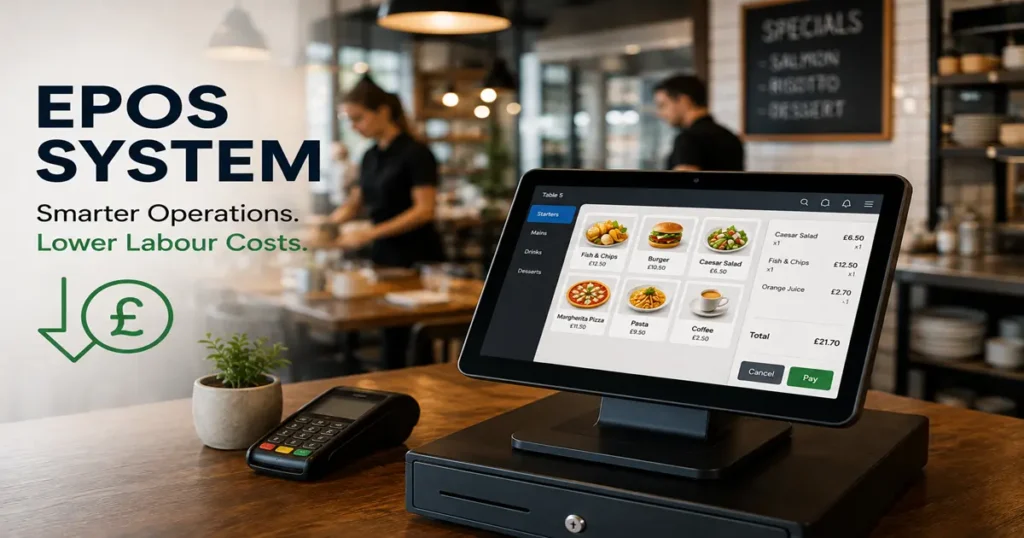
Running a restaurant in the UK means keeping a close eye on every cost, especially staff costs. With wages, National Insurance, holiday pay and other employment expenses adding pressure to margins, restaurant owners need to find ways to improve productivity without reducing the quality of customer service.
An EPOS system for restaurants can help by reducing manual work, speeding up service, improving communication between teams and giving managers better data for staffing decisions.
The goal is not simply to have fewer employees. It is to make better use of the staff you already have.
Why Labour Costs Matter for UK Restaurants
Labour is one of the biggest ongoing expenses for restaurants and hospitality businesses. UKHospitality has described payroll as typically accounting for around 25–35% of net turnover, although the figure can be higher depending on the business.
The pressure has increased further as the National Living Wage rose to £12.71 per hour for workers aged 21 and over from April 2026.
For restaurant owners, this makes productivity increasingly important. Paying staff for unnecessary admin, correcting order mistakes or covering quiet periods can quickly affect profitability.
Where Restaurants Waste Valuable Staff Time
Many restaurants lose productive hours through small inefficiencies rather than one major problem.
Common examples include:
- Taking orders manually
- Correcting incorrect orders
- Walking between the till and kitchen
- Re-entering orders
- Searching for sales information
- Counting stock manually
- Preparing reports
- Managing customer payments
- Answering repetitive customer questions
- Scheduling too many staff during quiet periods
Individually, these tasks may not seem expensive. Across every shift and every week, however, they can add up to significant labour costs.
How an EPOS System Helps Reduce Restaurant Labour Costs
An EPOS system brings many restaurant operations together in one platform. Instead of relying on separate systems and manual processes, staff can use connected tools for ordering, payments, kitchen communication, reporting and stock management.
1. Speed Up Order Taking
A well-designed restaurant EPOS system allows staff to find menu items quickly, select modifiers and send orders directly to the relevant preparation area.
This means employees spend less time writing orders or entering the same information multiple times.
Faster order processing can also help during busy lunch and dinner periods when restaurants need to serve more customers without immediately adding more staff.
2. Reduce Order Errors
Incorrect orders create additional labour.
A mistake can mean:
- Re-making a dish
- Speaking with the kitchen
- Processing a refund or adjustment
- Explaining the issue to the customer
- Delivering the corrected order
An EPOS system can standardise the ordering process and send the information directly to the kitchen, helping reduce avoidable errors.
3. Connect Front of House and Kitchen
A restaurant EPOS system can work with a Kitchen Display System (KDS) to send orders electronically to the kitchen.
Instead of relying on handwritten tickets or staff repeatedly communicating orders, kitchen teams can see incoming orders on a screen and organise preparation more efficiently.
This can reduce unnecessary movement between the front of house and kitchen while improving communication during busy services.
4. Use Sales Data for Smarter Staff Scheduling
One of the biggest opportunities for reducing labour waste is better staff scheduling.
Your EPOS system can show when your restaurant is busiest and when sales slow down. Managers can use this information to build rotas around actual demand rather than simply repeating the same weekly schedule.
For example, if sales data shows that Tuesday afternoons consistently have low demand, you may not need the same staffing level used during Friday evening service.
The result is a closer match between staffing and customer demand.
5. Reduce Manual Administration
Restaurant managers spend valuable time preparing reports, checking sales and reviewing performance.
An EPOS system can automate much of this information.
Instead of manually collecting figures, managers can access reports covering areas such as:
- Daily sales
- Sales by hour
- Best-selling menu items
- Payment activity
- Staff performance
- Discounts and refunds
- Stock movement
This gives managers more time to focus on customers, staff and daily operations.
EPOS Features That Can Improve Restaurant Productivity
Not every EPOS system offers the same features. When choosing an EPOS system for a UK restaurant, look for functionality that directly supports your workflow.
Kitchen Display System
A KDS can send orders from the EPOS terminal directly to kitchen screens, helping chefs prioritise and manage orders without relying on paper tickets.
Table Management
For restaurants with table service, table management can help staff see table status, assign orders correctly and manage seating more efficiently.
QR Code Ordering
QR ordering can allow customers to browse menus and place orders from their tables. This can reduce pressure on front-of-house staff during busy periods.
Online Ordering Integration
If your restaurant accepts takeaway or delivery orders, connecting online orders with your EPOS system can reduce duplicate data entry and help staff manage orders from one place.
Stock Management
An EPOS system can connect sales with inventory information, making it easier to monitor which products are selling and when stock needs attention.
Better stock visibility can also reduce the amount of time staff spend on manual stock checks.
Sales and Performance Reporting
Detailed reporting helps restaurant owners understand when the business is busiest, which products sell most and where operational changes may be needed.
HMRC notes that modern EPOS systems can provide management and commercial information alongside sales and stock-related functions.
How to Reduce Labour Costs Without Reducing Service
Reducing labour costs does not mean simply putting fewer people on the rota.
If a restaurant becomes understaffed, customers may experience longer waiting times, slower service and more mistakes. This can damage reviews and repeat business.
A better approach is to improve productivity.
An EPOS system can help you:
- Schedule staff according to demand
- Reduce repetitive admin
- Process orders faster
- Reduce mistakes
- Improve kitchen communication
- Automate reports
- Monitor sales performance
- Identify inefficient periods
The aim is to get more productive hours from your existing team while maintaining a good customer experience.
Why EPOS Data Matters for UK Restaurant Owners
Restaurant decisions should not always be based on assumptions.
Your EPOS system can provide historical sales data that helps you understand actual customer behaviour.
For example, you can identify:
- Your busiest trading hours
- Quiet days and periods
- Popular menu items
- Slow-moving products
- Average sales by shift
- Changes in customer demand
This information can then support better decisions around staffing, menus, stock and opening hours.
Current UK hospitality research is also putting greater emphasis on revenue generated per labour hour and scheduling efficiency, showing why productivity data is becoming increasingly important for operators.
Choosing the Right EPOS System for Your Restaurant
Before choosing an EPOS system, consider how your restaurant actually operates.
A small café may need a simple system for orders, payments and stock, while a larger restaurant may require table management, KDS integration, online ordering and detailed reporting.
Look for an EPOS system that offers:
- Easy-to-use ordering
- Fast payment processing
- Kitchen integration
- Table management
- Stock control
- Sales reporting
- QR ordering
- Online ordering integration
- Multi-site support if required
- Reliable customer support
- UK-focused functionality
It is also important to check how the system handles VAT and sales records. HMRC guidance highlights the importance of correct VAT-rate identification when EPOS systems are used for VAT accounting.
Final Thoughts
Restaurant labour costs are unlikely to become less important for UK operators. The key is to improve productivity without compromising customer service.
A modern EPOS system for restaurants can help by automating routine tasks, speeding up orders, improving kitchen communication and providing the sales data managers need to make better staffing decisions.
Instead of simply cutting staff hours, restaurants can use technology to make every staff hour more productive.
For UK restaurants looking to control costs and improve day-to-day operations, an EPOS system can be an important part of a more efficient and data-driven operation.