
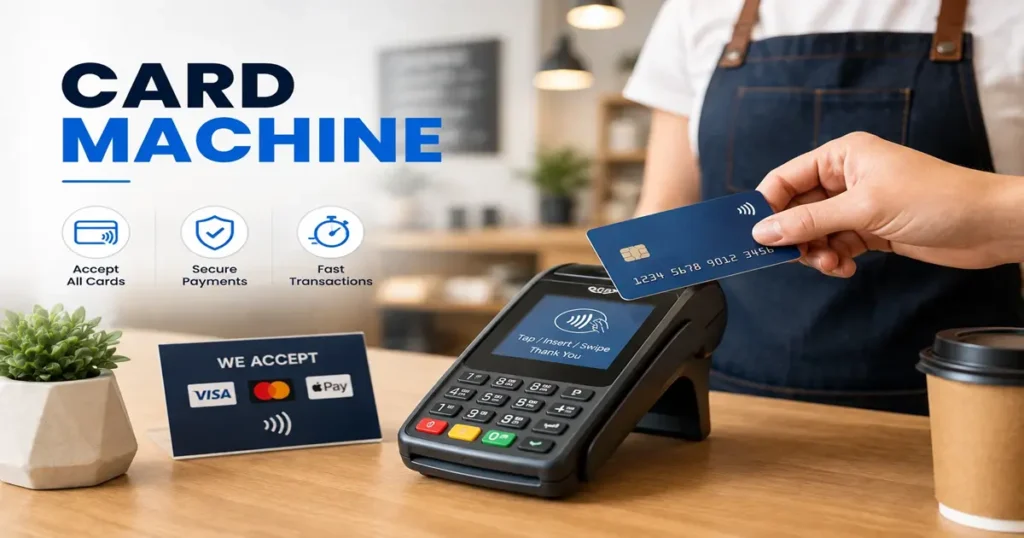
To get a card machine, choose a provider (like Teya, Shift4, or your bank), pick the machine type that suits your business, apply online or in-store, and set up your account. Most providers deliver within a few days, and you can start taking card payments almost straight away.
Fewer people carry cash these days. If your business only takes notes and coins, you could be turning customers away without even knowing it. A card machine fixes that problem quickly and affordably.
But how do you actually get one? Which type should you choose? And how much will it cost? This guide walks you through everything in plain, simple language. By the end, you’ll know exactly what to do to start accepting card payments.
What Is a Card Machine and Why Does Your Business Need One?
A card machine (also called a card reader or payment terminal) is a small device that lets you take payments from debit and credit cards. Want to know how do card machines work? Some also accept contactless payments, mobile wallets like Apple Pay, and chip-and-PIN cards.
Here’s why one matters for your business:
- More sales: Customers spend more when they can pay by card. Many won’t shop at all if you don’t accept cards.
- Faster payments: Card and contactless payments take seconds, so queues move quicker.
- Better cash flow: Money lands in your account within a day or two, depending on the provider.
- Fewer cash risks: Less cash on-site means less chance of theft or counting errors.
What Are the Different Types of Card Machines?
Before you buy, it helps to know your options. There are three main types, and the right one depends on how and where you sell.
Countertop Card Machines
These sit on your counter and plug into a power source and your internet connection. They’re ideal for shops, cafés, and any business with a fixed till point. They’re reliable but not portable.
Portable Card Machines
These connect over Wi-Fi or Bluetooth, so you can move around your premises. Great for restaurants where staff take payment at the table, or larger shops with several service points.
Mobile Card Readers
These are small, low-cost devices that pair with your smartphone or tablet through an app. They use mobile data or Wi-Fi. Perfect for market traders, tradespeople, and pop-up stalls. Providers like Shift4 and Teya are popular choices here.
How Do I Get a Card Machine For My Business
Getting set up is easier than most people expect. Follow these steps.
Step 1: Work Out What Your Business Needs
Think about where you sell and how often. A busy shop needs a countertop machine. A mobile plumber needs a small reader that fits in a pocket. Estimate your monthly card sales too, as this affects which pricing plan suits you best.
Step 2: Compare Providers
You have two main routes:
- Payment specialists like Teya and Shift4. These are quick to set up and often have no long contracts.
- Traditional banks and merchant service providers like Barclaycard, Worldpay, and Elavon. These may suit larger businesses with high sales volumes.
Compare fees, contract length, hardware costs, and payout speed before you decide.
Step 3: Apply for an Account
Most applications happen online and take just a few minutes. You’ll usually need:
- Your business details and address
- Your bank account details
- Proof of identity
- Your business type or trading history (for some providers)
Payment specialists often approve applications within a day. Banks may take longer and run more detailed checks.
Step 4: Buy or Rent Your Machine
You can either buy the device outright or rent it monthly. Mobile readers often cost under £50 to buy. Countertop and portable machines can cost more, or come with a monthly rental fee. Buying tends to work out cheaper over time if you plan to trade for years.
Step 5: Set Up and Start Taking Payments
Once your machine arrives, follow the setup guide. This usually means charging the device, connecting it to Wi-Fi or your phone, and running a test transaction. For a step by step guide, learn how to use a card machine to take your first payment. After that, you’re ready to start accepting card payments.
How Much Does a Card Machine Cost?
Costs vary by provider and machine type. Here’s a rough breakdown to help you plan:
- Hardware: Mobile readers start around £19–£50. Countertop and portable machines range from £50 to a few hundred pounds, or a monthly rental.
- Transaction fees: Most providers charge between 1.5% and 2.75% per card payment. Fees can be higher for business cards or international cards.
- Monthly fees: Some providers charge a monthly service fee, while pay-as-you-go options have none.
If you’re just starting out or have low sales, a pay-as-you-go mobile reader keeps costs down. If you process thousands of pounds a month, a plan with lower transaction fees usually saves you more.
How Do You Choose the Right Provider?
The best provider depends on your priorities. Use these simple guidelines:
- Choose a payment specialist if you want fast setup, no long contracts, and low upfront costs. Ideal for small and new businesses.
- Choose a traditional bank or merchant provider if you have high sales volumes and want lower transaction fees. Better for established businesses.
- Prioritise payout speed if steady cash flow matters most to you. Some providers pay out next day, others take longer.
Always read the contract terms. Watch for early exit fees, minimum monthly charges, and hidden costs.
Getting Started With Your First Card Machine
A card machine is one of the simplest ways to grow your sales and keep customers happy. Start by working out what your business needs, then compare a few providers on fees and contract terms. For small or new businesses, a low-cost mobile reader is a smart first step. For busier shops, a countertop or portable machine will serve you better.
Once you’ve picked a provider, most applications take minutes and your machine can arrive within days. That’s all it takes to start accepting card payments and stop losing sales to a cash-only counter.
Frequently Asked Questions
How long does it take to get a card machine?
With payment specialists like Teya or Shift4, you can often get approved within a day and receive your machine within two to five working days. Traditional banks may take a week or longer due to extra checks.
Do I need a business bank account to get a card machine?
Most providers ask for a bank account to pay your takings into. Some accept personal accounts for sole traders, but a dedicated business account is usually recommended and sometimes required.
Can I get a card machine with no monthly fee?
Yes. Many mobile card readers work on a pay-as-you-go basis. You pay only a small percentage per transaction, with no monthly charge. This suits businesses with lower or seasonal sales.
Do card machines work without Wi-Fi?
Some do. Many portable and mobile readers can use mobile data (a SIM or your phone’s connection) instead of Wi-Fi. This is handy for market stalls, deliveries, and businesses on the move.
Can I take contactless and mobile payments too?
Yes. Almost all modern card machines accept contactless cards and mobile wallets like Apple Pay and Google Pay. This is now expected by most customers, so it’s worth confirming before you buy.